
San Diego gets most of its rain between November and March, and buildings that sit dry for months are often caught off guard. The first storms bring tracked-in water, slippery entries, roof leaks and clogged drains, sometimes all in one afternoon. A little preparation now can prevent slip-and-fall incidents and costly water damage.
Inspect before the first storm
- Roof and gutters. Clear leaves and debris from roof drains, gutters and downspouts.
- Parking lot and landscape drains. Clear grates so water doesn’t pool at entrances.
- Doors and windows. Check weather stripping and seals on entries and storefronts.
- Ceiling tiles. Stains from last season can point to leaks that were never fixed.
- Low-lying areas. Know where water collected last year: loading docks, below-grade rooms and ground-floor suites.
Protect your entrances and floors
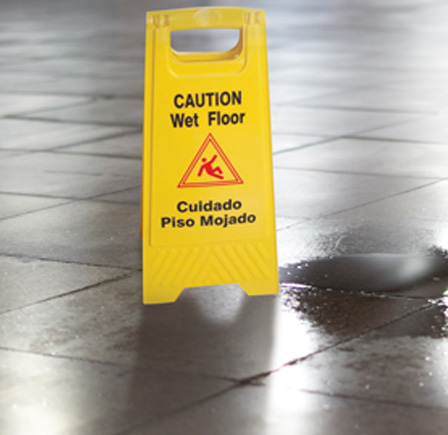
Most rainy-season mess walks in on shoes. Put down extra-long walk-off mats inside and outside every entrance, and swap them for dry mats on heavy rain days. Keep wet-floor signs ready.
Hard floors are most vulnerable: water and grit wear through finish quickly, so a fresh coat of finish on VCT entries before winter is a smart investment (see our guide to stripping and waxing VCT floors). Carpets near entrances take the worst of it; see how often to clean commercial carpet and plan an extraction once the season ends.
Adjust your cleaning schedule
On rainy days, entries, lobbies and elevator landings need more attention than your regular schedule allows. Ask your cleaning provider about extra mopping and mat changes during storm weeks.
Have a plan for when water gets in
Water damage gets worse by the hour. Wet carpet and drywall can start growing mold within a day or two, and standing water ruins flooring adhesives. Decide ahead of time:
- Who on your team calls for help after hours
- Where the water shut-off valves are
- Which provider you’ll call for commercial water removal
- What to move off the floor first: files, electronics and inventory
What professional commercial water removal involves
Commercial water extraction removes standing water with truck-mounted or portable extractors, then uses air movers and dehumidifiers to dry carpet, pad and subfloor. Speed matters most: the sooner extraction starts, the more carpet and flooring can be saved. Leaks and toilet backups that involve wastewater also need decontamination, not just drying, before the space is safe to use.
PBS Cleaning provides commercial water extraction and same-day emergency cleanup and decontamination for floods, leaks and toilet backups across San Diego County, so your space is cleaned and restored ASAP.
Talk to PBS Cleaning
PBS Cleaning (Personalized Building Services) has provided commercial cleaning and janitorial services across San Diego County for more than 40 years. To request a free, no-obligation walkthrough and quote for your facility, call (858) 295-2047 or visit pbscleans.com.
Frequently Asked Questions
When is San Diego’s rainy season?
Most of San Diego’s rain falls between November and March, so fall is the best time to prepare commercial buildings.
How quickly should water be removed after a leak or flood?
As soon as possible. Wet carpet and drywall can begin growing mold within a day or two, so fast extraction and drying save the most flooring.
How can I prevent slips at entrances during rain?
Use long walk-off mats inside and outside entries, swap wet mats for dry ones, keep wet-floor signs ready and add extra mopping on storm days.