
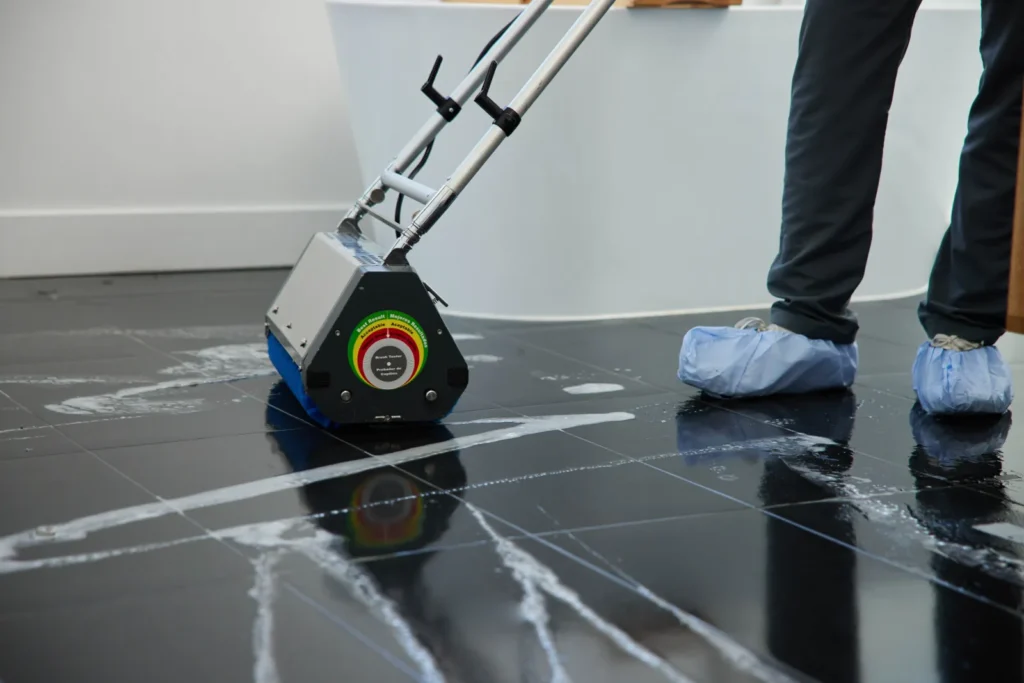
Tile is one of the toughest floors in a commercial building, but grout is its weak spot. Light-colored grout turns gray, then dark, and no amount of mopping brings it back. In restrooms, kitchens, lobbies and break rooms, dirty grout makes a clean floor look neglected. Here’s why grout gets so dirty and the best way to clean it.
Why grout gets dirty so fast
Most grout is cement-based and porous. It sits slightly below the tile surface, so dirty mop water runs into the grout lines and leaves soil behind as it dries. Over time, daily mopping can actually make grout darker. In restrooms, urine and moisture soak in too, which leads to stains and odors.
The best way to clean grout on commercial tile floors
- Clear the floor. Sweep or vacuum loose debris so you aren’t pushing grit into the grout.
- Apply the right cleaner. Use a cleaner suited to your tile and grout type and give it time to dwell and loosen soil.
- Agitate the grout lines. Grout brushes, by hand or machine, work the cleaner into the joints where mops can’t reach.
- Rinse and extract. High-pressure hot water rinses the soil out of the grout, and extraction removes the dirty water instead of leaving it to dry back in.
- Dry and inspect. Let the floor dry fully and spot-treat any remaining stains.
- Seal the grout. A penetrating grout sealer helps resist new stains and makes daily cleaning more effective.
Small areas can be scrubbed by hand. Large commercial floors need professional equipment to extract the soil rather than just move it around.
Should you seal grout after cleaning?
Yes, in most commercial spaces. Sealing slows down how fast grout absorbs dirt and liquids, so it stays cleaner longer and responds better to routine mopping. Grout sealer wears over time, so plan to reseal periodically, especially in high-traffic and wet areas.
Mistakes that damage tile and grout
- Acidic or harsh cleaners that can etch grout over time and damage natural stone
- Bleach that can discolor colored grout and doesn’t remove embedded soil
- Dirty mop water that redeposits soil into the grout lines
- Wire brushes that scratch tile and wear away grout
- Skipping the rinse, which leaves residue that attracts more dirt
Natural stone such as marble, travertine and limestone is especially sensitive to the wrong chemicals. It needs stone-safe products and care; see our stone and marble polishing services.
How often to deep clean commercial grout
Restrooms, commercial kitchens and entrances usually need professional tile and grout cleaning every 3–6 months. Lower-traffic areas can often go 6–12 months. Restroom grout is a common source of lingering odors, so pairing grout cleaning with a regular restroom deep cleaning schedule keeps both looking and smelling clean.
PBS Cleaning keeps tile and grout looking as good as the day it was installed. Our techs use special brushes to clean the grout and blast away dirt and mildew with high-pressure hot water jets. Learn more about our tile and grout cleaning and full commercial floor care services.
Talk to PBS Cleaning
PBS Cleaning (Personalized Building Services) has provided commercial cleaning and janitorial services across San Diego County for more than 40 years. To request a free, no-obligation walkthrough and quote for your facility, call (858) 295-2047 or visit pbscleans.com.
Frequently Asked Questions
What is the best way to clean grout?
Apply a cleaner suited to your tile and grout, let it dwell, agitate the grout lines with grout brushes, then rinse with high-pressure hot water and extract the dirty water. Sealing afterward helps grout stay clean longer.
Why does grout get darker after mopping?
Grout sits below the tile surface, so dirty mop water collects in the grout lines and leaves soil behind as it dries.
How often should commercial grout be professionally cleaned?
High-traffic areas like restrooms, kitchens and entrances typically need it every 3–6 months; lower-traffic areas every 6–12 months.