
Luxury vinyl plank (LVP) and luxury vinyl tile (LVT) have replaced carpet and VCT in many San Diego offices, clinics, retail stores and multifamily common areas. They look like wood or stone and hold up well. But many cleaning crews still treat luxury vinyl like old-school VCT, and that’s where problems start. Here’s how to clean LVP flooring the right way in a commercial building.
LVP is not VCT
VCT is porous and relies on layers of wax or floor finish for protection. LVP and LVT come from the factory with a built-in wear layer, usually a urethane or similar coating. That wear layer is the protection. Most manufacturers say not to wax luxury vinyl, and applying finish can void the warranty, cause hazy buildup and make the floor slippery.
If your floor looks hazy, streaky or sticky, the cause is often old wax, residue from the wrong cleaner, or too much water.
How to clean LVP flooring: daily and weekly care
- Dust mop or vacuum daily with a soft head to pick up grit before it scratches the wear layer.
- Damp mop with a pH-neutral cleaner made for vinyl. Skip ammonia, bleach and “mop and shine” products.
- Keep water off the seams. Flooding the floor can push moisture into plank joints and lift edges.
- Clean spills promptly, especially dyes, coffee and rubber-backed mat stains.
The best way to deep clean commercial LVP
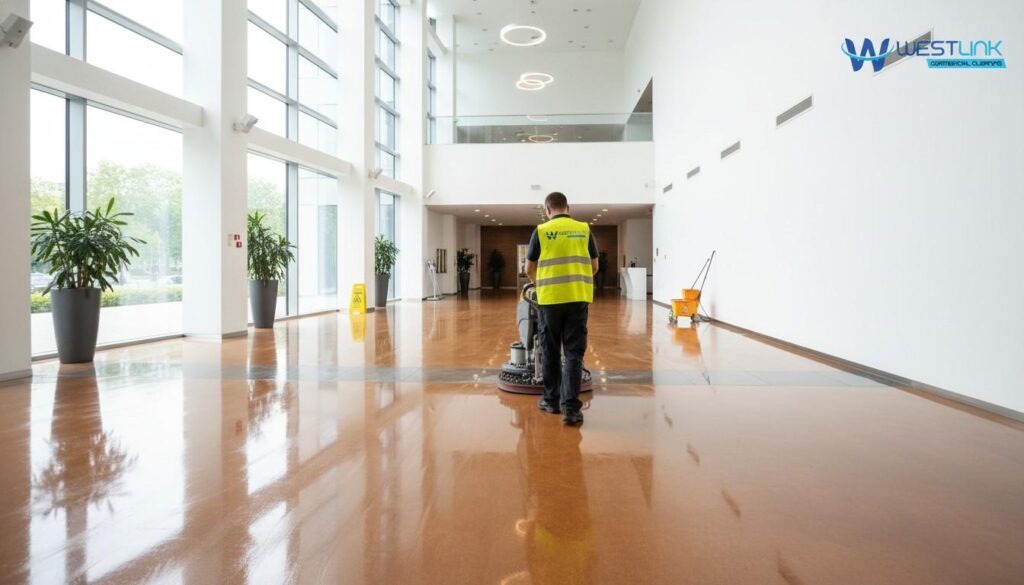
LVP in lobbies, corridors and break rooms collects ground-in soil that daily mopping won’t lift. A periodic deep clean uses a low-moisture auto-scrubber or rotary machine with a soft pad and a vinyl-safe solution, followed by a thorough rinse and dry. This lifts embedded dirt and old residue without cutting into the wear layer.
Common mistakes that damage LVP
- Waxing or applying VCT floor finish
- Steam mops and high-heat cleaning
- Aggressive stripping pads or harsh strippers
- Oil soaps and vinegar-heavy mixes that leave a film
- Rubber-backed mats that can stain vinyl
- Dragging furniture without protective pads
Protecting LVP in busy commercial spaces
Walk-off matting at every entrance stops most grit before it reaches the floor. Felt or vinyl-safe pads on chair legs prevent gouges. In San Diego, sand tracked in from coastal areas is a common cause of fine scratching, so matting and daily dust mopping matter even more near the beach.
Have both VCT and LVP?
Many buildings have VCT in back-of-house areas and LVP in lobbies and offices. Each needs its own care plan. VCT gets stripped and refinished on a schedule (see our guide to stripping and waxing VCT floors); LVP gets cleaned and protected but never waxed.
When to call a professional
If your LVP looks dull, hazy or sticky no matter how often it’s mopped, it likely needs a professional deep clean to remove residue and restore the factory finish. A floor care team can also set up a maintenance schedule built around your traffic.
PBS Cleaning’s ISSA-certified flooring techs provide LVP and vinyl plank floor cleaning that rejuvenates luxury vinyl and removes deep embedded dirt across San Diego County, alongside VCT stripping and waxing and full commercial floor care for buildings with mixed flooring.
Talk to PBS Cleaning
PBS Cleaning (Personalized Building Services) has provided commercial cleaning and janitorial services across San Diego County for more than 40 years. To request a free, no-obligation walkthrough and quote for your facility, call (858) 295-2047 or visit pbscleans.com.
Frequently Asked Questions
What is the best way to clean LVP flooring?
Dust mop daily, damp mop with a pH-neutral vinyl cleaner, keep water off the seams, and schedule periodic low-moisture machine scrubbing for high-traffic areas.
Can you wax LVP or LVT floors?
Most manufacturers advise against it. LVP and LVT have a factory wear layer that already protects the floor, and wax can cause buildup and slipperiness and may void the warranty.
Can you steam mop LVP?
It’s not recommended. High heat and moisture can weaken adhesives and cause planks to separate or warp.
Why does my LVP floor look hazy?
Haze usually comes from leftover wax or finish, residue from the wrong cleaner, or too much water. A professional deep clean can remove the buildup.